
WELCOME BONUS 300%
UP TO €2000 + 100
FREE SPINS
UP TO €2000 + 100
FREE SPINS
Home → Blackjack
Blackjack at Vega-Stars: Variants, Rules and Payouts
Card Counting at Shuffle Master Table: why it fails
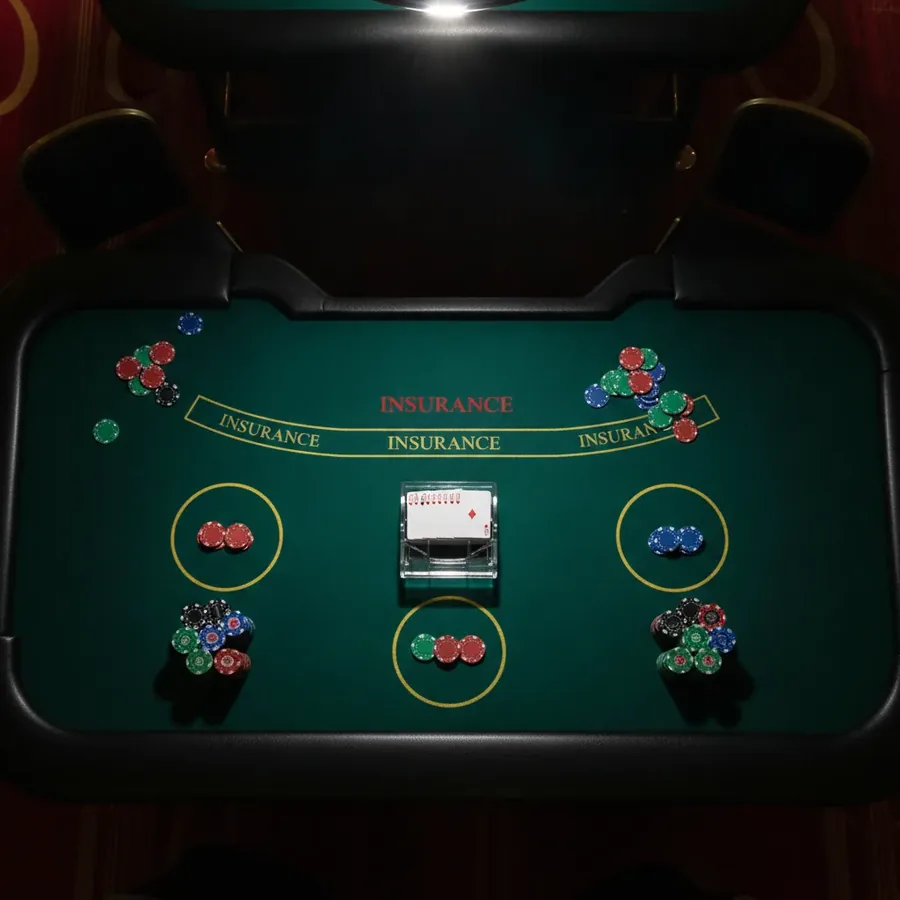
A Shuffle Master table, often utilising an eight-deck shoe, presents a significant hurdle for card counters. This system aims to maintain a low house edge, typically around 0.46% for a Blackjack variant with S17, DAS, and DOA rules. However, the continuous shuffling mechanism employed negates the effectiveness of traditional counting strategies.
Continuous shuffling machines, unlike traditional shoes, shuffle the cards after every round or even more frequently. This constant reshuffling makes it nearly impossible to build up a significant positive true count. For instance, a player relying on a true count of +3 or higher to gain an advantage would find this scenario unattainable.
The practical implication for a high roller is that strategies requiring card counting, such as identifying favourable conditions for Blackjack Insurance (RTP 92.53%), become unviable. Bets placed at such tables offer no exploitable edge through this method, forcing players to rely solely on basic strategy for optimal returns.
Register Late Surrender correctly in three steps
Late Surrender allows a player to forfeit half their stake after the dealer checks for blackjack, a rule that improves RTP by approximately 0.08 percentage points. This option should be exercised strategically when the player's hand is sufficiently weak compared to the dealer's upcard.
For a high stakes player, understanding when to utilise Late Surrender is crucial for minimising losses. For example, if a player has a hard 16 against a dealer's 10, surrendering would result in a loss of €500 on a €1,000 bet, rather than risking a larger loss by playing the hand out.
The key is to register this option before any further action is taken on the hand, such as hitting or doubling down. Failing to do so means the opportunity is lost, and the player must proceed with the hand as dealt, potentially incurring greater financial risk.
Bust at 22: Stake Lost Immediately
In most Blackjack variants, exceeding a hand total of 21 results in an immediate bust and loss of stake. This fundamental rule applies even to high rollers, where a €5,000 bet on a hand that goes bust is lost entirely. This scenario underscores the inherent risk in the game.
While some advanced rules can mitigate this, standard play offers no recourse if a player busts. For example, a game like Blackjack Insurance, with a house edge of 7.47%, still carries the risk of busting and losing the entire bet, irrespective of the side bet's potential payout.
This immediate loss consequence is a critical factor for high rollers to consider. A €5,000 bet lost to a bust means a significant immediate deficit, highlighting the importance of adhering to basic strategy to minimise such occurrences.
Continuous Shuffling Machine shuffles after each round
The utilisation of a Continuous Shuffling Machine (CSM) in certain Blackjack tables, such as those potentially found at Vega-Stars, ensures that cards are shuffled after every hand. This mechanism is designed to keep the game flowing and prevent card counting advantages.
For high rollers, this means that the composition of the shoe constantly resets, negating any potential benefits derived from tracking cards. A table with standard rules and a 3:2 payout for Blackjack, offering a house edge of 0.46%, still becomes unassailable by counting methods due to the CSM.
The consequence of a CSM is a consistent house edge throughout the session, removing any strategic advantage a player might gain from observing card sequences. This maintains a predictable RTP, such as the 99.54% seen in some 6-deck variants, without the possibility of card-tracking exploitation.
RNG draws cards from virtual eight-deck shoe
Online Blackjack variants at Vega-Stars often employ a Random Number Generator (RNG) to simulate drawing cards from a virtual eight-deck shoe. This is a standard practice in digital table games, ensuring fairness and randomness in card distribution.
For a high roller, this virtual shoe functions similarly to a physical one, with game outcomes dictated by the RNG's algorithm. For instance, a Blackjack variant with a 1.85% house edge due to a 6:5 payout, still operates with the probabilities inherent to an eight-deck scenario.
The RNG's role is to ensure that each card draw is independent, preventing any form of card tracking or pattern recognition from influencing the game. This provides a consistent and random gaming environment, where the RTP, such as 98.15% for the 6:5 game, is maintained without external influence.
Blackjack variants at a glance
| Variant | Payout | House edge | Rule | Bet range |
|---|---|---|---|---|
| Blackjack Split / Double / H17 – Regel-Effekte | n.a. (Regel-Modifikatoren) | H17 +0.22 Prozentpunkte; RSA −0.08 Prozentpunkte; DAS −0.14 Prozentpunkte | Dealer Hits Soft 17 verschlechtert RTP um 0.22 Prozentpunkte; Resplit Aces verbessert um 0.08 Prozentpunkte; Double After Split verbessert um ca. 0.14 Prozentpunkte; 6 Decks statt 8 – ca. 0.02 Prozentpunkte. | Double – Einsatz ×2 mit einer Karte; Split – bis 4 Hände; Ass-Split meist mit einer Karte. |
| Blackjack Surrender (Late Surrender) – Regel-Effekt | n.a. (Regel-Modifikator) | −0.08 Prozentpunkte | Spieler gibt Hand nach Dealer-Blackjack-Prüfung auf, verliert die Hälfte des Einsatzes. Verbessert RTP um ca. 0.08 Prozentpunkte. Early Surrender ist wesentlich wertvoller (bis −0.6 Prozentpunkte), aber extrem selten. | Rückzahlung 50% des Einsatzes |
| Blackjack 6 Decks, S17, DAS, DOA, Auszahlung 3:2, Basisstrategie | 99.54% | 0.46% | Dealer steht auf Soft 17; Verdopplung auf jeder Zweierkarte; Verdopplung nach Split erlaubt; keine Aufgabe. Basisstrategie ist für diesen Wert zwingend | Blackjack 3:2, normaler Gewinn 1:1, Insurance 2:1 |
| Blackjack Liberal Vegas Strip (liberale Regeln, 3:2) | 99.72% | 0.28% | Günstigste Regelkombination: S17 + DAS + Resplit + Late Surrender. Standardabweichung 1,15 | Blackjack 3:2, Gewinn 1:1 |
| Blackjack Ein Deck, klassische Regeln, 3:2 | 99.85% | 0.15% | Weniger Decks = niedrigerer Vorteil; ein Deck gibt ca. −0.48 Prozentpunkte gegenüber 8 Decks. Oft durch 6:5 Auszahlung kompensiert. | Blackjack 3:2, Gewinn 1:1 |
| Blackjack Auszahlung 6:5 statt 3:2 (6 Decks) | 98.15% | 1.85% | Ersatz von 3:2 durch 6:5 fügt exakt +1.39 Prozentpunkte zum Vorteil des Casinos hinzu – stärker als jede andere Regeländerung. Bei $10 Einsatz zahlt Blackjack $12 statt $15. | Blackjack 6:5, Gewinn 1:1 |
Which table limits suit 20 EUR balance?
For a 20 EUR balance, tables with a minimum bet of 1 EUR are most suitable, as seen with Evolution's Infinite Blackjack and Playtech's Quantum Blackjack Plus Live. These tables permit 20 individual bets before the balance is depleted, assuming no wins. Such limits allow for a reasonable number of hands to be played, offering some engagement time.
While 1 EUR tables are accessible, higher stakes are generally not advisable for a modest balance. For instance, the higher end of the 5,000 EUR bet limit on Quantum Blackjack Plus Live is entirely out of reach. Players with a 20 EUR balance should focus on tables where the minimum bet is a small fraction of their total.
The Blackjack Party table, with stakes starting from 1 EUR, also falls within this accessible range. This offers a more social atmosphere but still adheres to the principle of low minimum bets for smaller bankrolls. Understanding these limits is crucial for managing a 20 EUR balance effectively.
How long does a Live Blackjack round take?
A round of Live Blackjack, such as Infinite Blackjack by Evolution, typically takes around 30 to 45 seconds from the initial deal to the resolution of bets. This duration allows for optimal strategy decisions, including doubling down or splitting, without excessive delays. The fast pace is designed to keep players engaged over extended sessions.
The time for a round can be influenced by the number of players actively participating and making decisions. While Infinite Blackjack offers unlimited seats, the speed of play is still governed by the dealer and the game's progression. Quantum Blackjack Plus Live also adheres to a similar timeframe for its rounds.
Side bets, like those available on Infinite Blackjack (Any Pair, 21+3, Hot 3, Bust It), do not significantly extend the round duration beyond the main hand's resolution. The game progresses efficiently, ensuring that players can experience multiple hands within a defined period, which is key for high rollers to maximize their playing time.
How long do 100 EUR last at a 1 EUR table?
At a 1 EUR table, a 100 EUR balance can theoretically last for 100 hands if no wins are achieved and each hand results in a loss. This calculation assumes a consistent 1 EUR bet per hand without any doubling down or splitting. This provides a baseline for understanding session length.
However, considering the average RTP of 99.54% for Blackjack 6 Decks, the house edge is only 0.46%. This low house edge suggests that, over time, losses are minimized. Therefore, a 100 EUR balance at a 1 EUR table could realistically last for a considerably longer duration than 100 hands due to potential wins.
The inclusion of side bets, however, can alter this longevity. For example, Blackjack Insurance has a high house edge of 7.47%, which would deplete a 100 EUR balance much faster if frequently employed. Strategic betting on the main hand is key to maximizing play time.
Error insurance: 7 percent additional house edge
Blackjack Insurance, when offered as a side bet, presents a substantial house edge of 7.47%. This is significantly higher than the typical house edge on main blackjack hands, which can be as low as 0.15% for single-deck games. Players should be aware of this disparity when considering the insurance option.
The RTP for Blackjack Insurance is a mere 92.53%, a stark contrast to the near-perfect RTPs of 99.54% found in standard blackjack variants like Blackjack 6 Decks. This indicates that for every 100 EUR wagered on insurance, an average of 7.47 EUR is retained by the house.
Only under very specific card-counting conditions (True Count ≥ +3) might insurance become a marginally viable, though still risky, bet. For most players, particularly those not employing advanced strategies, this side bet represents a significant drain on their bankroll and is generally advised against.
Statistics display saves the last 100 rounds
Certain blackjack variants, like those offered by Playtech and Evolution, often feature a statistics display that records the outcomes of the last 100 rounds. This can provide players with insights into recent trends, though it's important to remember that each hand is an independent event.
For example, a player might observe patterns in side bet outcomes or the frequency of blackjacks within the last 100 rounds. While this data is presented, it does not influence future probabilities. The RTP for games like Quantum Blackjack Plus Live remains 99.57% regardless of past results.
High rollers might find this historical data useful for a superficial overview of game flow, but it should not be mistaken for predictive analytics. The fundamental odds and house edges, such as the 0.46% house edge in Blackjack 6 Decks, remain constant.
What Peek Means with a Dealer Ace
When a dealer’s upcard is an Ace, a 'peek' procedure is often employed in certain Blackjack variants. In games like Blackjack Liberal Vegas Strip, this means the dealer checks for Blackjack before any player action on hands where the dealer has an Ace. This rule significantly impacts strategy, particularly for high rollers who aim to minimise losses.
The House Edge for Blackjack Liberal Vegas Strip is as low as 0.28%, thanks to a favourable combination of liberal rules including S17, DAS, Resplit, and Late Surrender. For a player betting €1,000, understanding this peek procedure and its implications for potential dealer Blackjacks is crucial for maintaining optimal play and minimising adverse outcomes.
In scenarios where the dealer peeks and reveals a Blackjack, players who have doubled down or split their hands could face a complete loss of their stake. The probability of this outcome, while low, is a critical consideration for high rollers using a €1,000 bet, as it represents a substantial potential immediate loss beyond the initial wager.
Live stream with three cameras and OCR
High rollers engaging with live Blackjack can benefit from advanced streaming technology. Quantum Blackjack Plus Live, by Playtech, offers betting limits up to €5,000 and uses multiple camera angles to provide a comprehensive view of the game. This setup is designed to enhance the player's experience and provide clarity on the game's progression.
Features like Optical Character Recognition (OCR) in live dealer games, as seen in Evolution's Infinite Blackjack, ensure accuracy in card recognition and game state. With a betting range of €1 to €5,000, this technology is vital for maintaining the integrity of high-stakes play, where every card and decision is meticulously tracked.
The RTP for Quantum Blackjack Plus Live is stated at 99.57% with optimal strategy, and Infinite Blackjack at 99.47%. For a player betting €5,000, these figures represent a theoretical return, and the robust live streaming with OCR technology ensures that the game mechanics and payouts are transparently presented, supporting confident play at these stakes.
Splitting costs double bet: plan budget
In many Blackjack variants, splitting a pair requires doubling the initial bet, a crucial factor for high rollers managing their bankroll. For instance, if a player bets €1,000 and decides to split a pair of Aces in a game with a 3:2 payout, they are committing an additional €1,000, effectively placing €2,000 in action for that hand.
The Blackjack Liberal Vegas Strip variant offers favourable rules such as 'Double After Split' (DAS), which allows players to double down even after splitting a pair. While this rule improves the RTP to 99.72%, it means that a split hand can potentially involve an even larger total bet if doubling down is also exercised.
Considering that a €1,000 bet can become €2,000 upon splitting, and potentially more with DAS, high rollers must carefully budget for these scenarios. The standard deviation for Blackjack Liberal Vegas Strip is 1.15, indicating that significant swings are possible, making precise budget planning essential when engaging in these higher stake plays.
Bonus conditions often exclude Blackjack completely
The welcome bonus at Vega-Stars, offering 300% up to €2,000 plus 100 free spins, often comes with wagering requirements that can significantly impact table game players. It is frequently observed that table games, including Blackjack, contribute only 10% towards the bonus turnover, if they are included at all.
For a high roller aiming to leverage the full €2,000 bonus, the wagering requirement would necessitate a substantial turnover. If Blackjack contributes only 10%, a €40 wagering requirement on bonus funds means that €400 in Blackjack bets would be needed to clear just €40 of the bonus. This makes it difficult for Blackjack players to meet the conditions effectively.
Furthermore, many bonus terms explicitly exclude Blackjack entirely from contributing to wagering requirements. This means that even with large bets, any play on Blackjack tables would not count towards unlocking the bonus funds. Players should meticulously review the specific bonus terms and conditions to ascertain Blackjack's eligibility and contribution rate before accepting any promotional offer.
Clicked Too Late: Hand Is Automatically Held
In live dealer Blackjack, the speed of play is critical, especially for high rollers who may be betting substantial amounts. Games like Infinite Blackjack or Quantum Blackjack Plus Live have strict time limits for player actions before the hand is automatically played out according to standard rules or player settings.
For a player betting €1,000 or more, failing to act within the allotted time, such as the betting window for Infinite Blackjack from €1 to €5,000, results in the hand being automatically played. This automatic play typically defaults to a 'stand' decision, regardless of what the player might have intended.
This automatic holding of the hand can lead to unintended consequences, such as standing on a low total when a hit would have been strategically better. For high rollers, this missed opportunity or forced sub-optimal play can represent a direct financial loss, underscoring the need for constant attention and prompt decision-making at the live tables.
Contact
Live - online chat
Banking


Providers





Vegastars Casino 2026